Research

Deep-technology research for cognitive systems and autonomous intelligence

Cognivanta Labs studies how memory, reasoning, coordination, and control can be composed into usable cognitive architectures for digital and embodied systems.

ThemesArchitecture, autonomy, edge intelligence
FormatWhitepapers, blogs, technical notes
OutcomeDeployable frameworks
Publication Streams

Research organized around architecture and deployment

Whitepapers

Cognitive Architecture for Persistent AI Systems

A systems-oriented view of memory, reasoning, and action as one architecture for long-lived intelligent behavior.

Research Blogs

Why Context Memory Is the Missing Layer in Applied AI

Technical essays on state continuity, agent coordination, and the operational limits of stateless model calls.

Technical Publications

Edge Cognition and Distributed Control

Deployment patterns for local autonomy, telemetry fusion, and governance across physical systems.

Frameworks

Cognitive AI Frameworks

Reference structures for shared memory, agent roles, safety thresholds, and human-AI interaction surfaces.

Multi-Agent Systems

Shared Cognitive Memory for Coordinated Agents

Design patterns for agent specialization, communication, and traceable reasoning across distributed roles.

Human-AI Collaboration

Governed Autonomy with Human Override

Research into intervention design, trust calibration, and the boundaries of machine-initiated action.
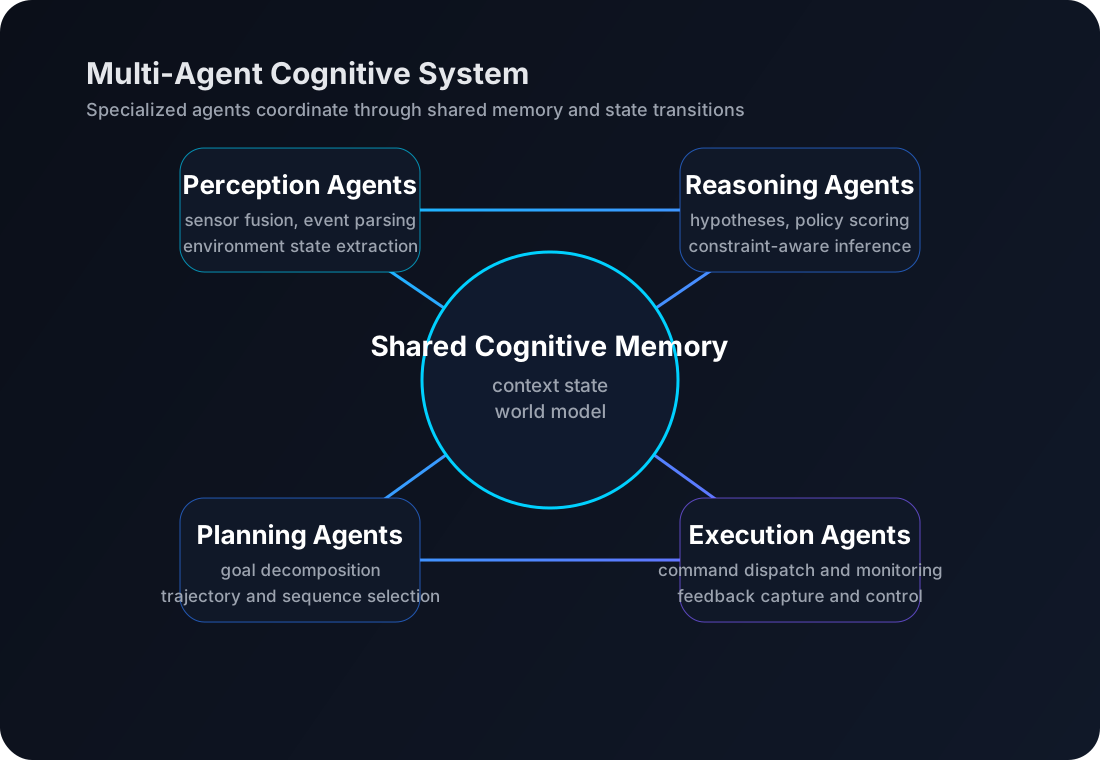
Multi-agent AI system connected through shared memory
Specialized agents become more reliable when they coordinate through shared cognitive state instead of isolated prompts.
Research Focus

Multi-agent cognition as an architectural research problem

The lab studies how specialization can improve system behavior without fragmenting overall intelligence. Shared memory is central: it lets agents interpret the same environment while operating at different levels of abstraction.
Perception Agents Reasoning Agents Planning Agents Execution Agents
Innovation Topics

Five threads shaping the current research agenda

  • Cognitive architectures that keep long-running state legible and controllable.
  • Edge intelligence patterns for operating under latency and connectivity constraints.
  • Embodied reasoning systems for robotics, mobility, and field autonomy.
  • Human-AI collaboration models that preserve supervision without destroying responsiveness.
  • Knowledge interaction systems that support exploration rather than only conversation.
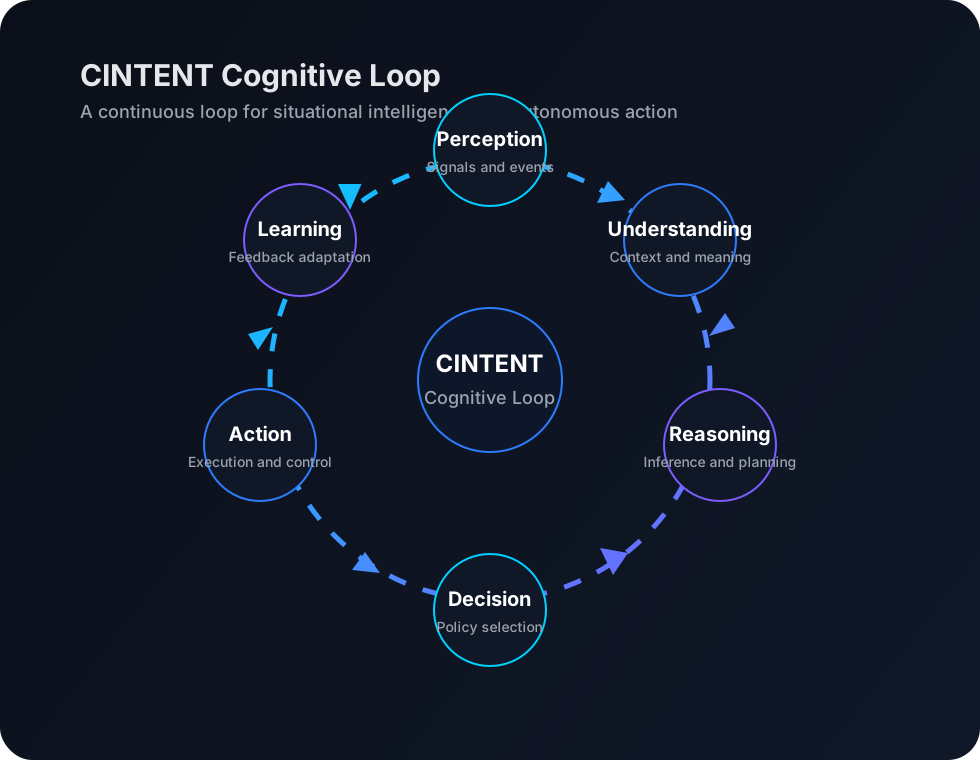
Cognitive loop diagram showing six nodes in a cycle
The cognitive loop is both a design principle and a research instrument for evaluating system continuity.